
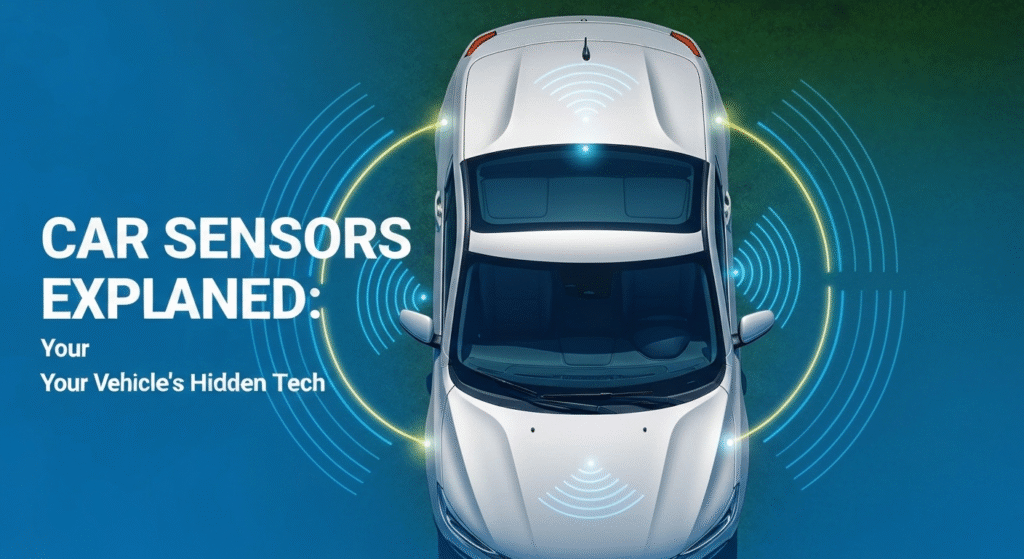

Have you ever wondered how your car knows to beep furiously when you get too close to the curb? Or how the windshield wipers magically spring to life the second it starts to rain? It’s not magic; it’s an intricate network of sensors. These small but mighty devices act as your vehicle’s eyes and ears, constantly gathering information about the world around it to make your drive safer and more convenient. They are the unsung heroes of modern automotive technology, working behind the scenes to automate tasks we once had to manage ourselves.
For years, I’ve been fascinated by the technology that makes cars tick. My journey has taken me from tinkering with classic engines to diving deep into the complex electronic systems of today’s vehicles. As Sharmin, I’ve spent my time writing about everything from automotive tools and maintenance to the cultural impact of car customization. This passion isn’t about formal certifications; it’s driven by a deep curiosity to understand how things work and a desire to share that knowledge. I believe in breaking down complicated topics into clear, understandable explanations so that every driver can feel more connected to their car.
What Are Car Sensors and Why Do They Matter?

Think of car sensors like the five senses of a human body. They detect changes in and around the vehicle—like light, distance, and moisture—and convert that information into electrical signals. These signals are then sent to your car’s main computer, known as the Engine Control Unit (ECU) or a more specialized Body Control Module (BCM). The computer processes this data in a split second and tells other parts of the car how to react.
The importance of these sensors can’t be overstated. They are the foundation for nearly all modern convenience and safety features.
- Safety: Sensors for blind-spot monitoring, forward collision warnings, and parking assistance help prevent accidents by giving you an extra set of eyes.
- Convenience: Automatic headlights, rain-sensing wipers, and proximity keys remove small distractions, allowing you to focus more on the road.
- Efficiency: Engine sensors monitor performance to optimize fuel consumption and reduce emissions, saving you money and helping the environment.
Without this constant stream of data, the advanced driver-assistance systems (ADAS) that we rely on simply wouldn’t be possible.
The Core Sensors You’ll Find on Most Modern Cars
While a high-end vehicle can have over 100 sensors, most modern cars share a few common types that handle key automated functions. Let’s break down the most prevalent ones, how they work, and where you can find them.
Parking and Proximity Sensors: Your Car’s Spacial Awareness

These are perhaps the most familiar sensors for many drivers. They are responsible for the beeping sounds that guide you into tight parking spots and warn you of obstacles you might not see. They create a protective bubble around your vehicle, alerting you to anything that enters it.
How They Work
There are two primary technologies used for parking and proximity sensors:
- Ultrasonic Sensors: These are the most common. They work like a bat’s echolocation. The sensor sends out high-frequency sound waves that are inaudible to humans. These waves bounce off objects and return to the sensor. The car’s computer measures the time it took for the wave to travel back and calculates the distance to the object. The faster the beeping, the closer you are.
- Electromagnetic Sensors: These sensors create a low-power electromagnetic field around the bumper. When an object enters this field, it causes a disturbance that the sensor detects. They are often mounted on the inside of the bumper, making them invisible from the outside.
Where to Find Them
You’ll typically find these small, circular sensors embedded in the front and rear bumpers. On vehicles with more advanced systems like blind-spot monitoring or cross-traffic alerts, you’ll also find them located on the side panels or integrated into the side mirrors.
Comparison of Parking Sensor Types
| Feature | Ultrasonic Sensors | Electromagnetic Sensors |
| How it Works | Emits sound waves and measures the echo. | Creates an electromagnetic field and detects disturbances. |
| Visibility | Visible as small discs on the bumper. | Often hidden inside the bumper. |
| Effectiveness | Excellent for detecting solid, large objects. | Can detect a wider range of objects, including smaller ones. |
| Common Issues | Can be affected by mud, snow, or heavy rain. | Generally less affected by weather but can be more complex to install. |
| Typical Use | Standard on most vehicles with parking assist. | Often found in aftermarket systems or some higher-end models. |
A real-world example I often see is when a client’s “park assist fault” warning light is on. Nine times out of ten, the cause is simply a layer of dirt or ice covering one of the sensors on the bumper. A quick wipe-down is often all it takes to fix the problem.
Rain Sensors: The Automatic Wiper Wizards
Rain-sensing wipers are a feature that, once you’ve experienced it, is hard to live without. They automatically adjust the speed and frequency of your windshield wipers based on the intensity of the rain, from a light mist to a torrential downpour.
How They Work
The magic happens in a small unit usually mounted to the windshield behind the rearview mirror. This unit contains an infrared (IR) light-emitting diode (LED) and a light sensor.
- The LED shoots a beam of infrared light at a 45-degree angle onto the windshield.
- On a dry windshield, the glass reflects almost all of this light back into the sensor.
- When raindrops land on the glass, they scatter the IR light. The more rain, the more the light is scattered, and the less light makes it back to the sensor.
- The sensor detects this reduction in reflected light and signals the BCM to activate the wipers. It can even tell the BCM to increase the wiper speed as the amount of returning light decreases further.
Where to Find Them
Look on your windshield right behind the rearview mirror. You’ll usually see a small, dark, or gel-like patch on the glass. That’s the housing for the rain and, often, the light sensor. It’s crucial that this area of the windshield remains clean and undamaged for the system to work correctly.
Light Sensors: Master of Illumination
Automatic headlights use a simple yet effective sensor to determine when to turn your lights on and off. This feature not only adds convenience but also enhances safety by ensuring your vehicle is always visible in low-light conditions.
How They Work
The system relies on a photodiode or phototransistor, which is a tiny component that can detect ambient light levels.
- The sensor continuously measures the amount of light in the surrounding environment.
- When the light level drops below a pre-set threshold—for instance, when you enter a tunnel, drive into a parking garage, or as dusk approaches—the sensor sends a signal to the car’s computer.
- The computer then activates the headlights, taillights, and sometimes the dashboard illumination.
- When the ambient light increases again, the sensor signals the computer to turn the lights off.
Where to Find Them
The light sensor is typically a small, dome-shaped nub located on the top of your dashboard, usually near the base of the windshield where it has a clear view of the sky. It’s important not to place papers or other objects over this sensor, as that can trick it into thinking it’s dark outside, causing your headlights to stay on.
How Do These Sensors Talk to Your Car?
All this information from the sensors would be useless if it couldn’t be interpreted and acted upon. This is where your car’s central nervous system comes into play, primarily involving the ECU and the CAN bus.
Think of it like this: the sensors are the nerve endings, the wiring harness is the spinal cord, and the ECU/BCM is the brain.
- Detection: A sensor detects a physical change (e.g., less light, a raindrop, a nearby object).
- Signal Conversion: It converts this physical input into a small electrical voltage or signal.
- Communication: This signal travels through wires to the appropriate control module (ECU or BCM).
- Interpretation and Action: The module interprets the signal. If the signal from the rain sensor indicates water, the module sends a command to the wiper motor to activate.
This communication happens almost instantaneously across a network called the Controller Area Network (CAN bus). As explained by the automotive experts at HowStuffWorks, the CAN bus acts like a shared language that allows all the different electronic modules in the car—from the engine and transmission to the lights and wipers—to communicate with each other over a simple two-wire system. This reduces complex wiring and allows for seamless integration of all these smart features.
Keeping Your Car’s Senses Sharp: Sensor Maintenance and Troubleshooting
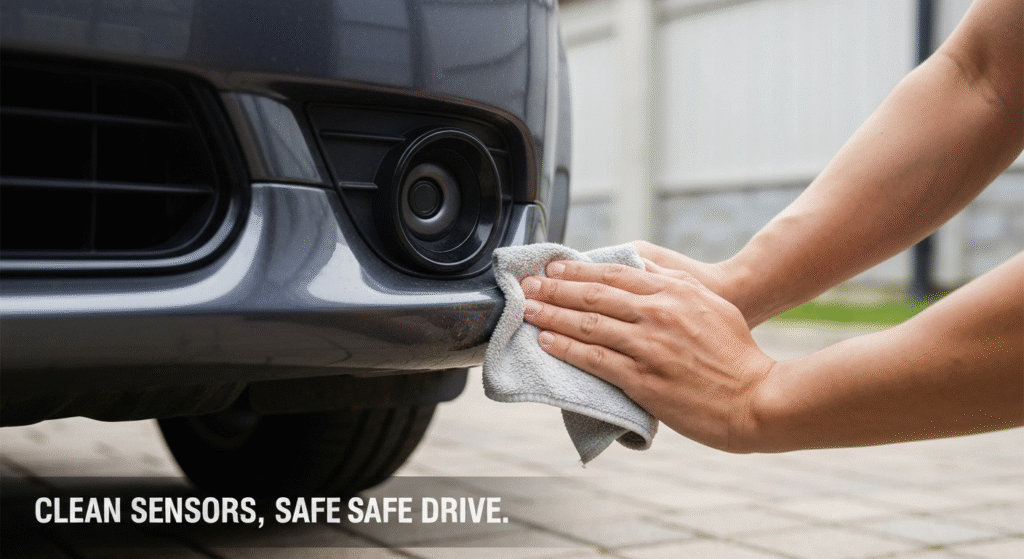
Because sensors are exposed to the elements, they can sometimes run into issues. The good news is that most problems are minor and can be prevented with some basic care. Keeping your car’s sensors clean and functional is one of the easiest ways to ensure your vehicle’s safety and convenience features work as intended.
Simple Cleaning and Maintenance Tips
- Parking Sensors: These are the most vulnerable to dirt. Regularly wipe down the sensors on your bumpers with a soft cloth, water, and mild soap. Pay special attention to them after driving in mud, snow, or slush, as buildup can cause false alerts or system failures.
- Rain and Light Sensors: Keep your windshield clean, especially the area around the rearview mirror. A streak of dirt or a bird dropping over the sensor can fool it into thinking it’s raining or dark. Also, be mindful of where you place toll passes or dash cams to avoid obstructing the sensors.
- Windshield Replacement: If you ever need to replace your windshield, ensure the technician uses the correct type of glass and properly recalibrates the rain and light sensors. A poorly installed windshield can cause these systems to malfunction.
Common Issues and What They Mean
Even with perfect maintenance, you might occasionally encounter a problem. Understanding what to look for can help you diagnose the issue quickly.
- Persistent Warning Lights: If a warning light related to parking assist, ADAS, or another sensor system stays on, it usually indicates a fault. While it could be a simple issue like a dirty sensor, it could also point to a wiring problem or a failed sensor that needs replacement.
- False Alarms: Are your parking sensors beeping randomly while you’re stopped in traffic? This can be caused by heavy rain, ice buildup, or even a loose license plate frame vibrating in front of a sensor.
- Features Not Activating: If your automatic headlights don’t turn on in a tunnel or your wipers don’t start in the rain, the first step is always to check for obstructions. Make sure the dashboard and windshield sensor areas are clear.
Common Sensor Troubleshooting Guide
| Symptom | Possible Cause | What to Do |
| Parking sensors are always on or beeping erratically. | Dirt, snow, ice, or water is on a sensor. A sensor may be misaligned. | Thoroughly clean all sensors on the bumpers. If the problem persists, have a mechanic check the alignment. |
| Automatic wipers are too sensitive or not sensitive enough. | The windshield is dirty or oily over the sensor area. The sensor may need recalibration. | Clean the windshield, especially the area behind the rearview mirror. If issues continue after a windshield replacement, return to the installer for recalibration. |
| Automatic headlights stay on during bright daylight. | The dashboard light sensor is blocked by an object. The sensor has failed. | Check the dashboard for anything covering the sensor. If clear, the sensor might need to be tested by a professional. |
| Blind-spot monitor warning light is stuck on. | The sensor area on the rear bumper or side mirror is dirty. | Clean the corners of your rear bumper and the surface of your side mirrors, as these are common locations for radar-based blind-spot sensors. |
Frequently Asked Questions (FAQs)
Can I replace a faulty car sensor myself?
For some external sensors, like a simple plug-in parking sensor, it can be a DIY job for someone with basic mechanical skills. However, many sensors, especially those tied to safety systems (like cameras or radar), require professional installation and recalibration to function correctly.
Do all new cars have these sensors?
While not all sensors are standard on every base model, most new cars today come equipped with at least light and parking sensors. Rain-sensing wipers and more advanced proximity sensors are often included in mid-to-high-level trims or as part of optional technology packages.
How much does it cost to replace a car sensor?
The cost varies dramatically depending on the type of sensor and the vehicle. A simple parking sensor might cost between $50 and $200 for the part and labor. A more complex sensor, like a radar unit for adaptive cruise control, can cost over $1,000 to replace and recalibrate.
Will a cracked windshield affect my rain or light sensor?
Yes, it absolutely can. A crack or chip in the line of sight of the sensor can scatter the infrared light just like a raindrop, causing the wipers to behave erratically. If the crack is near the sensor mount, it could compromise the sensor’s alignment and effectiveness.
Conclusion
The sensors in your car are a testament to how far automotive technology has come. They work tirelessly to create a driving experience that is safer, more comfortable, and more intuitive than ever before. By understanding what these devices do and how they work, you not only gain a greater appreciation for your vehicle but also become better equipped to maintain it. A little bit of awareness and simple cleaning can go a long way in keeping your car’s senses sharp, ensuring that it can continue to watch out for you on the road ahead. As technology continues to evolve, these sensors will only become more crucial, paving the way for the even smarter and fully autonomous vehicles of tomorrow.